Thursday, 7 July 2016

Thanks to Brexit, a new global financial crash is looming


It is no exaggeration to say that the world economy has just entered into a new age of deep uncertainty. Britain’s decision to quit Europe has sent profound shockwaves around the world at a very bad moment. The world economy is hardly out of one global financial crisis and the odds are surging that another worldwide crash is about to begin.

Britain’s Brexit vote has far-reaching consequences with the potential to throw the world into even bigger economic chaos and disorder than the 2008 global financial crisis. The catastrophic collapse in the UK pound, free-falling global equities and a dramatic surge in market volatility is just the start of it. The lid has been lifted off Pandora’s Box of morbid fear. There is no end to the list of deep concerns in investors’ minds, bringing risk aversion and market panic to boiling point.

Global financial confidence is a fragile house of cards at the moment. Global policymakers have worked courageously and been extremely inventive to keep the forces of global contagion at bay over the last seven years. Zero interest rates, creative monetary engineering and lashings of QE cash have held the line, but there is precious little left in the central banks’ kitty to deal with what may come next. The next crisis could be the one that breaks the central banks.

What complicates matters is that the world is already consumed with fear and loathing about unsustainable global debt levels, the parlous state of global banking, the spectre of a hard landing in China and growing geo-political concerns. Meanwhile, supranational bodies like the United Nations, World Bank, International Monetary Fund, OECD and Group of Seven seem increasingly powerless to make any difference.

Worries about the health of the flagging global economy are genuine. Increased uncertainty will hit economic confidence hard. Consumers will hold back on spending, companies will suspend output and investment intentions and global trade will slow down even more. More vulnerable parts of the world economy will risk slipping back into recession and deflation will continue to get the upper hand.

Major central banks will come under growing pressure to intervene with even more negative interest rates and extra QE provisions. Governments will be forced to end fiscal austerity and open up deficit spending again. Some governments will be tempted down the road of competitive currency devaluations. The world will heading deeper into a bizarre world of increasingly ineffectual and more dangerous policy remedies.

Increasingly alarmed investors will be looking for scapegoats, so it is no surprise the contagion spilling out from Britain is already subsuming European equity markets, peripheral bond and credit spreads and critically hitting the euro hard. Calls for similar EU referendums in France, Italy, Netherlands and Denmark have horrified the markets. Any escalation of the euro crisis could be the beginning of the end for European monetary union.

The risk of other countries leaving the EU or the euro zone is the stuff of nightmares. The European Central Bank is loaded to the gunnels with ‘derivative’ QE assets. Any risk of the ECB partnership untangling and the ensuing threat to the euro and global markets would be unimaginably toxic. A sub-parity euro/dollar fx rate is a strong possibility.

With the initial shock out of the way, the markets are bound to find some level of temporary support in the short term. The likelihood is that any correction will only be a bear market bounce and selling will persist into the longer term. The challenge is what will stop deeper rot from setting in. Central banks in disarray, global economic growth slowing and world trade contracting are all good reasons to dump risk assets at the first opportunity.

Short of running for the hills and joining survivalist movements, investors still have some options. Safe haven trades into high grade German and US government debt should help protect investor capital. On the currency side, Japanese investors have already flooded back into yen, but the US dollar and Swiss franc should also be priority buys for most investors. So too will be the age-old sanctuary of gold. Stocks, credit, emerging markets and commodity currencies like the Canadian and Australian dollars will be given a wide berth.


Right now, the market is in a state of flux and investors should be prepared for the worst. Market soothsayers are bound to dust off the worst of the Doomsday scenarios and the odds are in their favour. The clock is ticking and investors should be prepared for a new crash.

Wednesday, 22 June 2016

Europe is in deep trouble whichever way Brexit vote turns out


Whichever way Brexit vote turns out, its a no win for Europe

Britain’s EU referendum is the big risk event global markets are dreading. It could be a nightmare scenario, threatening to trigger a chain reaction that could plunge markets back into a new global catastrophe. The real worry is that the world is already slipping back into a black hole of uncertainty whichever way the vote goes. This time there may be no easy way back.

No wonder world policymakers are panicked. While European Council President Donald Tusk clearly over-exaggerated by warning Brexit could mean the end of Western civilisation, both the IMF and OECD are deeply alarmed about the consequences for the world economy and financial markets. The major central banks are already drawing up contingency plans and getting ready to intervene if the UK votes to leave the EU and markets descend into chaos. It is hard to see what they can do. Global currency, credit and equity markets are already highly agitated.

Europe should be especially worried. Whatever happens in the Brexit vote, Europe will feel deep shockwaves. It is a 'no win situation', with Europe standing to lose whichever way the vote goes. Europe is not long out of the 2009-2013 euro zone crisis and it has taken huge stabilisation efforts from EU governments and the European Central Bank to stop European monetary union and the euro falling apart. It would not take much to open up old wounds and set Europe lurching off into new economic and financial disorder.

A 'leave' vote will have an immediate impact. Capital flight out of the UK, a sterling currency crisis and the threat of economic ruination would hit British markets especially hard. Europe would not be spared and market speculators would quickly home in on contagion risks spilling over into the euro zone. Economic and financial stability would be knocked off its perch. The bears would scent blood and begin the hunt for 'who goes next'.

Even if the UK votes to 'remain', the barn door has been opened far too wide on European disintegration risks. Despite all the healing balm thrown into the ring from the ECB's monetary super-stimulus in the last seven years, the same old problems persist. Europe remains deeply divided, split between the economic haves and have-nots. Extremely rich and powerful Germany juxtaposes on the one side with struggling euro zone nations like Greece, Portugal and Spain on the other.

Immersed in deep debt, stifled by austerity and dogged by rampantly high unemployment, there is little chance of long-lasting economic recovery for these nations, especially considering the extremely challenging global backdrop right now. The threat of hard landing in China, instability in emerging economies and now the threat of Brexit contagion all pose serious dangers ahead for struggling euro zone nations. But there are bigger elephants in the room, not least growing anti-austerity protests in France and the risk that Italy falls victim to the deepening investor gloom.

If the risk of Greece going into national insolvency threatened to up-end global markets, the threat of Italy going into a banking and government debt default would be nemesis for the world economy. The problem would be far too great for the ECB’s limited resources to cope with. The recent election successes of the populist anti-austerity Five Star Movement underlines that there is a ticking time-bomb under conventional Italian politics. Italy remains the sleeping giant of the euro zones’ Doomsday disorders. In time Italy will come back to haunt the markets.

Despite the drive to negative interest rates, the glut of QE money and the high official ramparts surrounding the euro zone's vulnerable financial markets, the ECB's monetary defences are far from impregnable. With market jitters becoming more acute, peripheral yield spreads are already widening relative to German government bonds on safe haven flows. If markets decide to take on the ECB, it could trigger a dangerous re-run of the 1992-1995 and 2011-2012 deconvergence bloodbaths. European markets are highly vulnerable.

The real worry is that EU policymakers continue to kick the can down the road without solving the real economic and social inequalities dogging Europe. As long as Germany gets stronger, at the expense of the weaker European nations, political divisions will widen and the cohesive forces holding Europe together will continue to fragment. Anti-austerity protests and political extremism are on the rise and leading to deepening antipathy towards Brussels and the EU.

These trends are crystal clear in the usual suspects like Greece, where up to three quarters of voters are dissatisfied with the EU. More alarmingly similar trends are showing up in core countries like Austria, Netherlands and France which are witnessing the emergence of more inward-looking, nationalistic and anti-EU tendencies. It bodes badly for the future.

There is much more at stake in Britain's Brexit vote. The survival of European unity, the single market and the euro is on the line. Investors have good cause to be alarmed.

So far, the euro seems to be holding steady by default. Once the Brexit vote is out of the way, the markets will inevitably return to the thorny issue of Europe’s deepening political fractures and place their bets on eventual euro break-up risks down the line.

Euro parity versus the US dollar still beckons. Europe is not out of the woods by any stretch of the imagination, with or without Britain.


Wednesday, 8 June 2016

Brexit will shake investors’ faith in Britain to the core


It is no exaggeration to say that Britain stands at the edge of disaster. In two weeks time, UK voters will be making a momentous decision that will shape Britain’s future for generations. As the nation heads to June polls on whether to remain in or leave the European Union the stakes are high.  A majority vote in favour of a British EU exit (Brexit) could lurch the country into chaos for years. Its impact will be felt around the globe.

Britain is heading into the unknown and the country seems worryingly split down the middle. Judging by recent surveys, public opinion seems to be edging towards the Leave camp. If this continues, the final run-in to the referendum will be an anxious time for the nation and a source of rising instability for Britain’s financial markets.

International confidence in the UK could be shaken to the core. Britain’s strong growth record, its leading role as a global financial centre and even the survival of the 300-year old British union will be under a cloud. If Britain crashes out of Europe, Scotland has threatened another independence vote in order to stay inside the EU. Britain’s influence as a leading international power would begin to wane.

The main credit ratings agencies have already warned they would take a dim view of UK assets on a British break from Europe, warning that a sovereign downgrade might be inevitable. International confidence in UK investments would suffer badly. Britain is no stranger to currency crisis and the pound could take a beating. International investors would shun stocks, government bonds and industrial assets in the uncertainty. And it might take years before the UK can strike a favourable EU trade deal and forge a new working relationship with Europe.

International investors could lose out heavily, especially those that were coaxed into investing into Britain under Margaret Thatcher’s private sector renaissance in the early 1980’s, when international companies began flooding into the UK. Under sweeping structural reforms, Britain became a Promised Land of free enterprise and market-friendly deregulation for foreign investors. The added advantage was free admission into Europe’s single-market, with front-door access to the EU’s 500 million-strong consumer market.

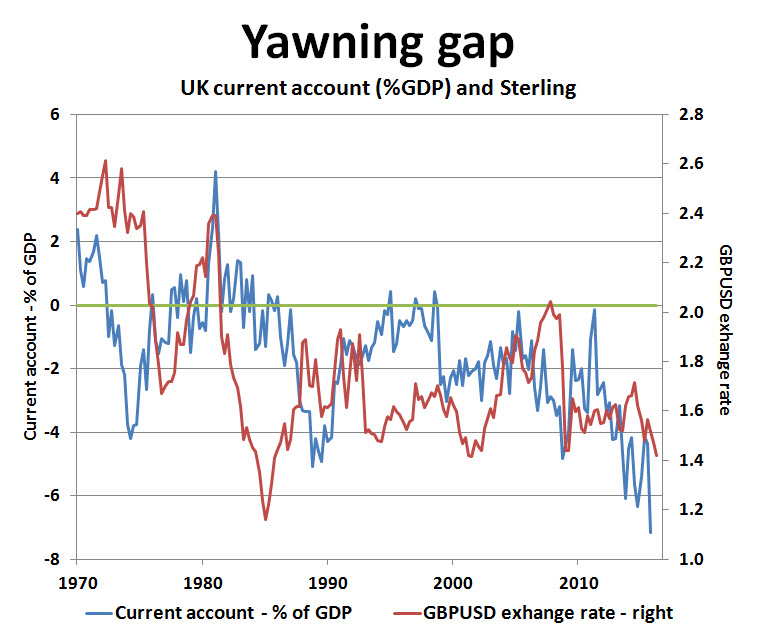
Over the years, this has reaped rich rewards for Britain and brought strong inflows of foreign direct investments (FDI). Inward FDI has helped finance the UK’s current account deficit and provided vital support for the UK’s asset markets. The UK now stands as the world’s third largest destination for inward FDI behind the US and China, with the stock of FDI investments in Britain currently around 1.7 trillion US dollars. The UK is the top target for FDI flows into Europe thanks to Britain’s track record on providing a safe port for foreign money. All this could change very dramatically.

A beneficiary has been the UK car industry where Asian companies are major stakeholders. Since the 1980s, Japan’s Nissan, Toyota and Honda have built up significant UK manufacturing presences, while India’s Tata Motors has owned Britain’s Jaguar Land Rover since 2008. Any threat to Britain’s free trade access into Europe would cast these investments into doubt. Any barriers to free trading would be bad news for UK-based manufacturers and momentum to quit Britain and switch production to Europe could turn into a stampede.

As the United States learnt to its cost under the strong dollar regime during the mid-1980s, when many US companies switched manufacturing overseas to stay competitive, it has been extremely hard to win back business that has moved offshore. The US’s yawing trade gap is testament to that. Britain could end up in the same boat if international companies panic about losing eligibility for free trade status in Europe. FDI inflows would reverse, tearing a large hole out of Britain’s industrial capacity in the process. It would be bad news for UK growth prospects, for the balance of payments and for British industrial prestige.

Indeed, there is a possibility that Tata Steel’s recent decision to quit UK steelmaking is less to do with global over-supply and heavy loss-making in their UK plants and more to do with a loss of confidence in Britain’s industrial future due to Brexit fears. In addition, recent news of Tata Motors plans to build a factory in Slovakia, its first European JLR car plant outside the UK, could be a bad omen for British car manufacturing shifting into Europe if Brexit takes off.

Brexit also poses serious risks to Britain’s future as a global financial centre. The UK financial services sector is a vital part of the economy, employing over one million people, accounting for 12 per cent of total output and 11.5 per cent of UK government revenues. The City of London is not only home to over 250 foreign banks, but also the European headquarters for many of them. If Britons vote to leave the EU, London faces losing one of its top money spinners – the multi-trillion euros traded-derivatives business which the ECB would like to see housed on European and not UK soil. Furthermore, many foreign banks based in the UK might find it more prudent to comply with the EU’s regulatory framework by moving to Frankfurt or Paris. Brexit could spark a major bank drain out of Britain.

Britain’s economy looks vulnerable. Since the global financial crisis, the UK has grown faster than its Group of Seven partners, but only thanks to the economic fizz of zero interest rates, quantitative easing and loose fiscal policy. Without these policy boosts, underlying UK growth potential would be nearer to 1.5 per cent than the latest 2.0 per cent headline rate. The shock of Brexit, a quick foreign exodus out of UK investments and a collapse in British productive capacity and jobs could hit confidence hard, tipping the economy into a nasty recession.


In the worst case scenario, the UK could fall into a deep depression. Unfortunately, UK policymakers are running out of options to deal with new crises. UK interest rates are already at rock bottom and QE has already run its course. A sharply weaker pound would only be a small fillip for what little would remain of UK manufacturing locked outside of Fortress Europe. Foreign investors would be hit hard by the fall in their sterling-based assets. For international manufacturers, banks and financial services companies there are compelling reasons to get out quick while the going is good.

Brexit will rip the Great out of Britain


Nobody likes two-minded, ‘on the one hand and on the other hand’ economists – this economist included. But it is time to come off the fence and get the formalities over Britain’s imminent European referendum out of the way without further ado.

If Britain votes to remain in the EU on 23rd June, the impact will be a damp squib and the dust should settle very quickly. But if UK voters opt to quit Europe, it will amount to a national economic disaster, on par with the 1930s depression and 2008’s financial crisis. This time round, there may be no easy way back from what would be left of Britain’s broken economy.

The economy and UK financial markets could be left scarred for many decades and, in the worst case scenario, it could lead to the eventual break-up of the British union if Scotland seeks independence. It will end up a horror show for the economy. Lasting harm to British export prospects, the loss of inward capital flows and the threat to London’s future as a major financial centre will do untold damage to Britain’s standing as a leading industrial nation.

Exit from the EU could mean the UK’s exclusion from the 500-million strong free trade area for an unspecified period of time. It would cast a major shadow over British business’ output, investment and hiring intentions. The risk of recession and mass unemployment would be a high probability.

Consumer confidence could be hit very hard as would the UK’s supposedly ‘rock-solid’ housing market. In recent years, UK property prices have been pumped up to fever-pitch thanks to near-zero interest rates, over-abundant mortgage finance and a rush of foreign money buying up ‘gold brick’ investments in London’s bloated property market. Brexit could sound the death-knell for a new property crash. People forget too easily that nationwide UK house prices collapsed by 20 per cent in the aftermath of 2008’s global financial crisis. It could easily happen again, but a lot worse. Up to 30 to 40 per cent could be wiped off property values.

Brexit could mark the start of a catastrophic collapse in foreign direct investment into the UK. Since Britain first joined the EU in 1973, North American and Asian companies have invested heavily in the UK economy to secure unbridled access to European markets. Outstanding FDI investments in the UK are now worth around $1.7 trillion and any reversal of confidence would put serious strains on the economy and UK currency if they decide to pull out and re-locate to the Continent.

Any threat to London’s dominance as a global financial hub would spark a serious outflow of overseas banks and investment funds from Britain, especially if Brussels decides to stack up legislative rules against institutions operating out of the UK. Major foreign banks have already warned that they are preparing contingency plans to move to European cities like Frankfurt, Paris and Dublin in the event of Brexit. Britain’s financial services dominated economy would be hit hard, compromising the UK’s fragile balance of payments position even more.

Brexit might mark the end of the 300-year old United Kingdom. Scottish nationalists have warned that Brexit would lead to another vote for independence. If Scotland leaves the union, at a stroke, up to 8 per cent of GDP would be lopped off the UK economy. Ratings agencies have warned this would warrant a major UK sovereign downgrade – bad news for the pound.

There may be little immediate economic effect in the aftermath of a leave vote, but in the longer run, Britain could be staring into the jaws of a depression. Putting numbers onto the horror show is extremely arbitrary, but the number 10 keeps cropping up. A depression would mean national output dropping at least 10 per cent and unemployment surging above 10 per cent.

The impact on financial markets would be immediate though – and the number 10 crops up again. Market surveys suggest the pound could lose as much as 10 per cent in face value and Britain’s FTSE-100 stock index could fall by 10 per cent. The odds are the falls would be even greater. The pound could easily touch parity with the US dollar and the euro. It could end up a very nasty rout.

Right now, markets still seem to be putting on a brave face, with the bias favouring the status quo and Britain staying put. But the real event risk is the chance of the unimaginable happening.


Judging by the bandwagon effect in the leave camp right now, consumers, business and markets would be wise to batten down the hatches and prepare for an unexpected shock.


Thursday, 19 May 2016

Time for global investors to batten down the hatches ahead of approaching financial storm


There is an ominous sense of déjà vu about the world right now which is reminiscent of a global economy out of control and heading into a new disaster. Global growth is running out of steam, world debt exposure has reached crisis proportions, while over-leveraged financial markets are looking extremely over-stretched. A single major credit event like 2009’s Lehman’s collapse would be enough to tip the world back into deep catastrophe.

Next time, there might be no easy way back. Policymakers are running out of options on how to deal with any new crisis. Global interest rates are already down at rock bottom levels, the world is awash with synthetic money created by the central banks’ super-stimulus and government debt exposure is bursting at the seams. Short of prayers to St Jude, the patron saint of Lost Causes, the world’s policy cupboard is looking too bare to cope.

If policymakers seem to be sleepwalking into another crisis, so too are the global financial markets. Lifted by $15 trillion of central bank pump-priming over the last seven years, global equity markets seem far removed from any deep-rooted bear market tendencies. Bond yields are close to record lows, corporate credit spreads remain relatively tight, while market fear gauges like the Vix volatility index are hardly fretting. It is fair to say that global financial markets have ‘irrational exuberance’ written all over them right now.

Some global policymakers may be ranting and railing against the potential ‘doom-loop’ that the world economy is getting itself tangled up in, but little is being done to stop the rot. Supranational bodies like the International Monetary Fund, the Bank for International Settlements and the World Bank have all warned about the explosion of global debt, but talking is one thing and direct action is something else.

Their main worry is the global recovery has become too dependent on an explosive build-up of debt thanks to all the cheap money generation in the wake of the financial crash. Since 2007, world debt is estimated to have risen by $57 billion, an accumulation which could have devastating future effects if it starts to sour. Households, businesses and governments have all increased debt at a time when borrowing costs have hit an all-time low. It is less of a problem as cheap money is helping the real economy by boosting consumption, investment and growth. But the chief worry is that cheap money has mainly been ramping up financial speculation in property, stocks and high risk assets.

Once the world interest rate cycle starts to turn, this will have seismic consequences for global growth and for markets. Tighter lending conditions will drag on growth as consumer spending and business output, investment and hiring plans start to stall. Higher borrowing costs will also tighten the screws for over-leveraged investors raising the risk of more than a knee-jerk correction in markets at some stage.

Confidence is key right now. In recent years, corporate debt has reached extreme levels and far exceeds pre-Lehman levels, with companies continuing to borrow like there is no tomorrow. If market confidence collapses and equity and credit markets start to crumble, the cost of capital to businesses could rise very sharply. The increased spectre of major corporate failures or debt defaults could quickly lead to very sharp hikes in credit spreads.

This would be serious news for emerging market economies (EMEs), which have been a major crucible for world economic recovery in the wake of the global crash. During the recovery process over the last six years, EMEs have become seriously over-burdened by crippling debt levels and any new crisis of confidence could easily trigger investor capital outflows and spark a new financial storm. World growth prospects could suffer badly.

The global economy is sitting on a ticking time bomb which quickly needs defusing to avert another full blown crisis. A further troubling development is that the next potential leader of the world’s biggest economy is far from being a safe pair of hands. If Republican candidate Donald Trump is elected to be the next US President in November, the world could be in deep trouble. 

Trump’s maverick ideas to rid the US of its $19 trillion Federal debt pile by ‘discounting’ could be the beginning of the end for global financial stability.  It could trigger a savage reaction in global markets and the mother of all credit events.

It may be time for global investors to batten down the hatches against the approaching financial storm.

Thursday, 12 May 2016

Euro zone’s brave new world of recovery is doomed to failure


For once, the European Central Bank has been doing the right thing. Regularly blamed for not doing enough, or being too late with policy solutions, the ECB’s monetary super-stimulus is finally paying dividends. Euro zone growth is outpacing its Group of Seven partners and the bloc’s unemployment rate has fallen dramatically. Understandably it is building hopes for sustainable recovery ahead.

Things are clearly looking up after years of economic poor health and crisis in Europe. Thanks to the first quarter’s 0.6 per cent GDP gain, the euro zone economy grew at its fastest pace in five years, driven by unlikely stars such as France and Spain. Critically the euro zone economy has risen above its pre-crisis peak, with growth surging past the US and UK.

Sadly, the euro zone’s success could easily prove to be its undoing. The more euro zone growth gets onto a stronger footing, the more it strengthens the case for Germany’s hawkish central bank (the Bundesbank) to put a future block on open-ended ECB easing. Unfortunately, the recovery still needs more careful nurturing to deal with major economic headwinds coming the euro zone’s way.

External risks and internal frictions still pose serious pitfalls for the economy. Slowing global growth, entrenched deflation pressures and deepening financial market uncertainty pose enough potential to derail the euro zone’s nascent recovery. The euro zone also needs to chart its way through dangerous political waters. Threatened exits by Britain and Greece out of the European Union could pose deeply troubling shocks to the euro zone economy up ahead.

While the recovery in growth is clearly welcomed, it is raising concerns in Germany that the ECB is going over the top with too much stimulus. Negative interest rates and vast infusions of QE money might have put the euro zone back on track to recovery, but German policymakers are worried that too lax policy will open up the floodgates to overheating and inflation risks down the line. The economy may be getting too much of a good thing.

Upcoming ECB policy meetings could see some brutal confrontation between the monetary hawks and doves. The Bundesbank are likely to press for more monetary stability with no new easing, possibly even calling for a policy taper at some stage soon. In its view, ECB policies have already made enough positive inroads. The banks are lending more and consumer demand is picking up thanks to easier access to cheap credit and stronger labour markets.

The Bundesbank’s key concern is that the euro zone has become over-dependent on the flow of easy money and the dilemma is what happens when the taps are finally shut off. Consumers, businesses and financial markets must be weaned off the steroids of super-stimulus before it is too late and the euro zone follows Japan into a similar zombie land of economic stagnation, perpetual deflation and ineffectual policymaking.

ECB doves remain adamant the central bank’s monetary accelerator must stay firmly rammed to the floor. The pro-easing camp believes the euro zone is bogged down by fiscal austerity, high debt, weak bank profits, high unemployment and too much excess capacity in the economy. While ECB President Mario Draghi might have met his pledge to do ‘whatever it takes’ to secure recovery, the argument now is about ‘how much more will it take’ to secure sustainable prosperity longer term.

Right now the omens are not encouraging. Last month the euro zone slipped back into deflation again, the euro zone’s all-important economic sentiment indicator has started to flat-line, while German business sentiment indicators are looking more lacklustre. If Germany, the euro zone’s biggest growth driver, loses much more momentum, the chances of the ECB hitting its modest 1.5 per cent growth target this year will be compromised.

As a result, ECB policy is heading towards potential deadlock. The monetary policy meeting in June could prove to be a critical High Noon for rate policy intentions with neither side looking likely to back down. It could end up in a dangerous stalemate. 


Any sign of a policy stall is unlikely to go down well with the markets. The US Federal Reserve and the Bank of England are both in ‘wait and see’ mode, while the Bank of Japan is keeping its powder dry in case of emergency. If the ECB looks in any doubt on future easing, it could catapult global risk appetite and world equity markets into a very nasty tail-spin.

Article appeared in the South China Morning Post 10th May 2016

Japan's inaction could be the last straw for global equity rally


There is a very good chance the global equity rally has finally reached the end of the road. Stock market sentiment has been at a tipping point for quite a while and last week’s shock over the Bank of Japan’s refusal for now to go any deeper into negative territory on interest rates could prove to be the last straw. Market fears about the era of central bank monetary super-stimulus coming to an end are gaining ground.

Japan has reached a policy impasse. The economy is grinding to a halt and another recession seems on the cards. Consumer demand is dead in the water, industry is riddled with gloom and the economy is stuck in deflation. Government finances are in a mess, leaving little room for further fiscal reflation. And now the Bank of Japan is throwing in the towel on further interest rate cuts, unless there is an emergency. Japan’s macroeconomic policy has just hit a brick wall.

It is no surprise that Japanese investors are taking matters into their own hands and selling stocks and buying the yen. Last week the yen posted its biggest weekly gain since 2008, bad news for exporters and an ominous portent of increasing risk aversion to come. Normally, when Japanese investors are spooked they liquidate overseas investments very quickly. Repatriation of funds back to Japan is a classic knee-jerk reaction in times of market stress.

The yen was one of the biggest beneficiaries of the global financial crisis and seems a reasonable barometer for risk appetite. What is worrying now is that the yen is rallying before any deep-seated crisis has occurred, almost in anticipation of worse to come. Stock markets need a healthy diet of good news to maintain a positive momentum, but the market mood is coming unstuck quite quickly.

For the last seven years, the global bull market has been fed by a constant flow of positive support and super-stimulus from the major central banks. Equity markets have been pumped up by zero interest rates and aggressive quantitative easing, which has generated a huge cash pile of cheap liquidity for investors to buy risk assets. Since 2009, central banks have spent $15 trillion on bond and equity purchases, creating a market dependency that will be all the more painful when it ends.

This glut of global money is providing a strong cushion for markets at the moment but as soon as the central banks enter into a more definite phase of policy normalisation the safety net will quickly disappear. Investors already seem to be scaling back their appetite for risk in anticipation. In Europe, investors already battle-scarred by euro zone uncertainties, have cut their exposures to equities back to their lowest level since the 2011-12 crisis. The trend is clearly heading lower.

There is no sense of extreme market crisis just yet, just a gradual creep towards the exits. The trouble is that there is nowhere to hide if events turn nasty. Investor holdings of safe haven government bonds and cash are close to historic highs, despite wafer thin and even negative rates of return. Investors are being driven by an overriding need to protect capital far and above the usual goal of maximising returns. Safe haven demand for yen, Swiss francs and German government debt are likely to surge as the going gets tougher.

The usual suspects are lining up to ambush the markets. Business cycle slowdown, hard landing risks in China, the danger of epic debt defaults, another euro zone crisis and deepening geo-political tensions all have the potential to wreak major damage on investor confidence and global financial stability. Perhaps the greatest risk of all is the central banks not coming to the rescue any more.

Right now, it looks like the US Federal Reserve, the Bank of Japan and the Bank of England are done and dusted with easing. Even the possibility of additional European Central Bank stimulus looks more remote now that euro zone growth has had a 0.6 per cent GDP surge in the first quarter. However tenuous the recovery, ECB hawks have their excuse to dig their heels in.


If the central banks do come in again with additional easing, the markets will know it will be for crisis management reasons. And as soon as the BOJ hits the panic button to lower rates again, financial markets will have added proof that the global equity rally has finally hit the buffers.

Article appeared in the South China Morning Post 3rd May 2016